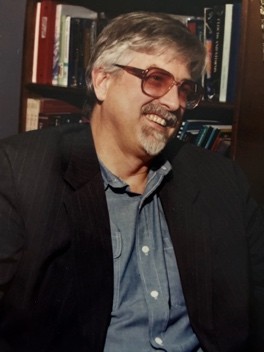
It is with deep sadness that we report the passing of Prof. Eric A. Smith on September 13, 2026. He was born in West Palm Beach, FL on July 16, 1943. Eric was one of the most prominent atmospheric scientists of his generation, and his career spanned much of the development of modern satellite meteorology and quantitative Earth observations. Over nearly six decades, he made significant contributions to the use of space-based observations for understanding atmospheric radiation, clouds, precipitation, and the global hydrological cycle. His scientific career closely paralleled the transformation of satellite observations from pioneering experimental measurements into sophisticated global observing systems.
Although much of his later work centered on rainfall and precipitation processes, Eric remained closely connected to the atmospheric radiation community throughout his career. He was a familiar participant in the International Radiation Symposium and maintained strong intellectual ties to the radiation and remote-sensing communities from which much of his scientific work had grown.
Eric’s scientific career began at the University of Wisconsin during the formative years of satellite meteorology. After graduating in mathematics in 1966, he joined Verner Suomi, the pioneer of the satellite meteorology. One of Eric’s first assignments involved recovering and analyzing Earth radiation-budget measurements from the 1959 Explorer 7 satellite. He later worked with observations from the early ATS geostationary satellites, helping to develop methods for tracking clouds and deriving atmospheric winds from sequences of satellite images. This work formed part of an important transition in meteorology, as satellite imagery began to serve not merely as pictures of the atmosphere but as quantitative information for atmospheric analysis and numerical weather prediction.
Eric later recalled these as exceptionally exciting years, when satellite observations were beginning to transform meteorology and the broader Earth sciences. He worked in an environment that included many of the leading atmospheric scientists of the time, and Suomi became one of the most important mentors in his scientific life. When Eric left Wisconsin for Colorado State University in 1975, he carried with him both the scientific foundations and the spirit of innovation that characterized those pioneering years.
At Colorado State, his scientific interests broadened considerably. He worked in satellite meteorology, radiative transfer, cloud properties, radiation budgets, monsoon meteorology, and the emerging use of passive microwave observations for precipitation measurement. This breadth of interests remained a hallmark of his career: he was equally comfortable with observations, radiative-transfer theory, atmospheric physical processes, and field measurements.
A major phase of Eric’s career began in 1985 at Florida State University, where he established a broad research program in atmospheric physics and remote sensing. His interests encompassed radiative transfer, physical retrievals using satellite- and ground-based radiometric measurements, cloud-radiation interactions, monsoon energetics, and hydrometeorology. Increasingly, however, precipitation science became the central focus of his work. He helped advance physically based precipitation retrieval and played a leading role in developing approaches that combined active radar and passive microwave observations for the Tropical Rainfall Measuring Mission (TRMM). He later led the TRMM combined-algorithm effort, helping establish the scientific basis for bringing these complementary measurements together in quantitative rainfall retrieval.
This progression led to one of the major achievements of Eric’s career: his role in the formulation of the Global Precipitation Measurement (GPM) mission. After serving as Director and Chief Scientist at the NASA/University of Alabama in Huntsville Global Hydrology & Climate Center (GHCC) from 1999 to 2000, he became the original NASA/GSFC Mission Scientist for GPM, a position he held from 2001 to 2010. In this role, he helped initiate its scientific program, define the mission scope and scientific requirements, shape the observing strategy of its principal precipitation instruments, and coordinate activities with Japan Aerospace Exploration Agency (JAXA), European Space Agency (ESA), and the international ground-validation community. Building on his earlier leadership in TRMM, these efforts extended his influence far beyond individual studies or retrieval algorithms. He helped shape the observing concepts, retrieval strategies, and international scientific framework of modern satellite precipitation research. His impact on precipitation science was deep, global, and enduring.
His scientific engagement did not end with retirement in 2010. He continued to pursue scientific inquires actively, including serving as a Senior Research Scientist from 2010 to 2015 at the Center for Research on the Changing Earth System (CRCES), where he remained involved in research on the evolving Earth system.
Beyond his scientific life, Eric was a deeply warm and compassionate person, with a strong concern for others, especially those who were vulnerable or facing difficulties. When a student encountered personal problems, he did not remain a distant advisor. He always tried to help as though the problem were his own. His students, colleagues, and friends will remember not only his scientific achievements, but also his humanity, generosity, and kindness with which he lived his life.
As we mourn his passing, we are reminded that the influence of a great scientist and teacher extends far beyond his own lifetime. Eric’s legacy will live on in his friends and colleagues, in the students he mentored (including 15 Master’s and 20 Ph.D. students at Florida State University), and in generations of atmospheric scientists who will continue to build upon the scientific foundations he helped establish.
Eric’s intellectual curiosity was never easily satisfied. He was always drawn toward the next unanswered question, eager to explore what remained beyond the limits of current understanding. His belief of no unanswerable scientific issues will encourage the next generation scientists to explore solutions when facing any unknown phenomenon. It is comforting to imagine that this spirit of inquiry continues somewhere beyond our reach – that Eric is still exploring, still questioning, and still seeking, now free from the orthopedic complications and health ailments that had troubled him in his later years.
He is survived by his wife, Anna, his daughter, Anakarin, and his son, Alan.
By B.J. Sohn & Song Yang