A tribute to Prof. Yuk Ling Yung (1946-2026)
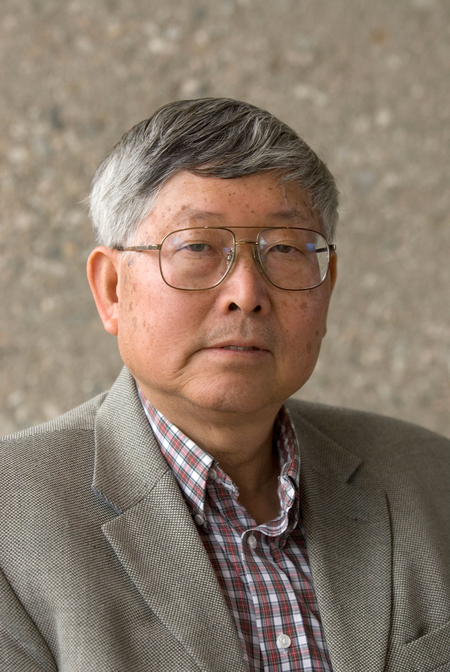
Yuk Ling Yung, Professor at California Institute of Technology (Caltech) and Senior Research Scientist at Jet Propulsion Laboratory (JPL), passed away on 16 March 2026 at the age of 79, after a short period of illness. Yung made fundamental contributions to Earth and Planetary Sciences and educated generations of scientists.
Yung was born in mainland China and moved with his family to Hong Kong in 1953. He obtained his bachelor’s degree with honors in engineering physics from the University of California, Berkeley, in 1969 and his Ph.D. in physics from Harvard in 1974. After another three years at Harvard conducting research and teaching, he joined Caltech in 1977 as a tenure-track assistant professor. He has stayed at Caltech since then and became an associate professor and a professor with tenure in 1982 and 1986, respectively. From 2012 to 2016, he was the Smits Family Professor at Caltech. Since 2014, he has also taken a position as senior research scientist at JPL, a laboratory managed by Caltech for NASA.
The combined depth and breadth of Yung’s research contributions are unrivaled. He has made fundamental and impactful contributions to planetary chemistry, planetary evolution, atmospheric radiation, atmospheric chemistry, global environmental change, and astrobiology. He is well regarded as the founder of modern planetary atmospheric chemistry. He systematically built the most advanced atmospheric chemistry model for all planets and satellites with atmospheres in our solar system and extended it to exoplanets. His profound and sustained contributions to studies of the planetary atmosphere and evolution, as well as astrobiology and exoplanets, have been recognized by the American Astronomical Society (AAS) with the Kuiper Prize in 2015, the highest honor the AAS bestows on any planetary scientist. The International Astronomical Union named asteroid 19370 after him in 2015. For his contributions to atmospheric radiation, he was awarded the Elsevier Poynting Award on Radiative Transfer in 2025, which “honors the life-time contributions and achievements of a scientist who has made a landmark impact on the radiative transfer research and its applications.”
In atmospheric radiation, Yung coauthored one of the seminal textbooks, Atmospheric Radiation: Theoretical Basis, 2nd Edition, with the late Prof. Richard Goody. Goody was so impressed by Yung’s understanding of the subject when Yung took his class at Harvard, and by Yung’s use of sophisticated radiative transfer treatments in his photochemical modeling work, that he invited Yung to be the co-author of this book when it was time to revise for a 2nd Edition. Since its publication in 1989, the book has become a classic textbook used by many departments worldwide. It also becomes a reference book on the shelf for countless atmospheric scientists. According to Google Scholar, this book has been cited 3752 times by March 2026.
A paper published by Yung and his then-student Zhiming Kuang (Kuang et al., 2002, in Geophysical Research Letters) proposed an innovative three-band technique for high-precision remote sensing of CO2 and demonstrated its feasibility using synthetic data. This study serves as the theoretical basis for all past and current missions to monitor CO2 from space by all space agencies, including OCO2/OCO3 by NASA, GOSAT/GOSAT2 by JAXA, TanSAT by the China Space Agency, and the to-be-launched CO2M by ESA. A 2020 Science paper from his group (Le et al., 2020), using both satellite remote sensing and modeling results, is the first to report unexpected air pollution during the COVID-19 outbreak in China.
In the endeavor to build the most advanced photochemistry models for planets and satellites, a critical and indispensable step is a comprehensive treatment of the radiative transfer of solar radiation, especially the UV radiation. Along these lines, Yung has published important theoretical studies of radiative transfer. For example, he single-authored a paper published in JQSRT in 1976, in which he established a semi-analytic solution for directly calculating the mean integrated radiance intensity (i.e., the equivalent of actinic flux) in an inhomogeneous Rayleigh-scattering atmosphere. While the mean integrated radiance intensity is seldom of interest to remote sensing, it is the absolute starting point for any modeling of photochemical reactions. The results from this work have been used in many subsequent atmospheric chemistry models, especially in the early days when computational power was a constraint. A Ph.D. thesis he advised and published as Shia & Yung (1986) in the Astrophysical Journal theoretically examined the multiple scattering of light by a planetary body of arbitrary shape, a topic of interest in the astrophysical community for years. They found a direct relation between the microscopic symmetry of the phase function for each scattering event and the macroscopic symmetry of the differential cross-section for the entire planetary body. The findings from this study directly facilitated the modeling of radiative transfer in the comet atmosphere.
Yung has trained generations of scientists. Over 50 years at Caltech, he has graduated 44 PhDs as sole advisor and 2 PhDs as co-advisor. 34 of them have stayed in academia, and 15 have become tenured professors at world-leading universities such as Harvard, the University of Chicago, University of Michigan, and the University of Washington. He has been actively promoting the presence of women scientists in earth and planetary sciences: out of the eight women PhDs who completed their PhDs under his supervision, four became tenured professors in the US and Canada.
Besides the honors mentioned above, Yung was elected fellow of the American Academy of Arts and Sciences in 2011, AGU fellow in 2003, and received NASA Exceptional Scientific Achievement Medal in 2004. Yung was a hobby mathematician and published in formal mathematical journals. The last such study was published in Discrete and Continuous Dynamical Systems in 2010. He is an avid hiker and a trail enthusiast. Yung has published 460+ journal papers and two books, with a Google H-index of 101 as of March 2026. Yung has made profound contributions to atmospheric radiative transfer and its applications in planetary atmospheres, including studies of our own Earth’s atmosphere. His far-reaching contributions, fueled by a unique vision and unwavering intellectual curiosity, have significantly advanced our understanding of multiple frontiers. He and his scientific legacies will be remembered by the community.