In 2017, the International Commission on Atmospheric Chemistry and Global Pollution (iCACGP) established the Paul J. Crutzen Award for Early Career Scientists as part of its 60th Anniversary celebrations. The 2022 winner will be presented with the award during a ceremony at the 2024 iCACGP-IGAC Joint Conference in Kuala Lumpur (9th-13th September 2024).
Paul J. Crutzen, a Dutch atmospheric chemist, was a pivotal figure in understanding the Earth’s atmosphere, notably his groundbreaking work on ozone formation and decomposition. His research, which earned him the Nobel Prize in Chemistry in 1995, highlighted the impact of human activities on the environment and emphasized the urgent need for global action. The International Commission on Atmospheric Chemistry and Global Pollution (iCACGP) awards the “Paul J. Crutzen Award for Early Career Scientists” in recognition of his legacy. This prize honors outstanding research contributions by early-career scientists in atmospheric sciences, aiming to inspire and support the next generation of researchers in their pursuit of innovative solutions to environmental challenges. It serves as a reminder of Crutzen’s profound impact and encourages the continuation of his work in safeguarding our planet’s future.
Following a selection process that considered scientific excellence, productivity, and the breadth of scientific contribution — as reflected in the nomination and support letters, scientific publications, and their impact on the scientific community — the iCACGP Paul J. Crutzen Award for Early Career Scientists 2024 is awarded to Dr. Georgios Gkatzelis. This recognition is for his contribution to advancing our understanding of the increasing importance of emerging anthropogenic VOC pollution sources.
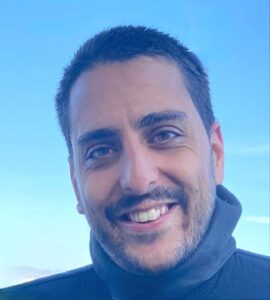
Georgios Gkatzelis was nominated by Spyros Pandis and strongly endorsed by Andreas Wahner and Carsten Warneke. He completed his Ph.D. at Forschungszentrum Jülich, Germany, and subsequently worked at the forefront of atmospheric science at the University of Colorado, Boulder, and the National Oceanic and Atmospheric Administration (NOAA). After two years as a research scientist in the U.S., Georgios returned to Forschungszentrum Jülich, where he has been a group leader since August 2020.
Throughout his career, Georgios Gkatzelis has demonstrated creativity, determination, and an impressive skill set, coupled with the ability to successfully complete projects. These qualities have enabled him to develop innovative approaches to contemporary scientific problems. In particular, his pioneering work in atmospheric science using advanced mass spectrometry techniques to detect urban pollutants in both gas and particle phases has pushed the atmospheric community in a new direction. His focus on the emerging significance of volatile chemical product (VCP) organic vapor emissions is ground-breaking. Georgios was the first to identify tracer compounds for VCP emissions in ambient air and to quantify their contribution to urban pollution and ozone formation.