
The 2025 ACAM training school and workshop were held in Bali, Indonesia, with the training school organized on 9-10 June, followed by the ACAM workshop on 11-13 June. The training school was attended by 40 early-career participants (students and postdocs), while over 100 participants attended the workshop. The training school focused on enhancing scientific and technical capacity in the areas of remote sensing of aerosols, clouds, and atmospheric composition, as well as chemistry-climate modeling and inverse modeling of greenhouse gas emissions. In addition to lectures presented by five scientists, the training school participants completed data analysis exercises and group projects, using open-access tools and programming languages, involving satellite data and modeling focusing on Asian atmospheric pollution and regional monsoon climate.
The 3-day workshop represented four cross-cutting themes – (i) Field campaigns, modeling activities or satellite programs in the context of ACAM science, (ii) Aerosols/air quality characterization, aerosol-monsoon-climate interactions and feedbacks, (iii) Trace gas and greenhouse gas emissions – measurements, inventories, satellite observations and (iv) Chemistry-climate interactions and pollution transport to the upper troposphere/lower stratosphere (UTLS). There were 50 contributed talks delivered on these thematic topics, and 60 poster presentations and lightning talks. Altogether, participants represented 17 countries from Asia, Europe, the USA, and Australia, with 50 early-career researchers attending the workshop, thanks to the generous support from both longstanding and new sponsors of ACAM. Field campaigns, modeling activities, satellite observations, and measurement networks have always been integral components of the ACAM science and community. At the 2025 workshop, the modeling working group reviewed the various community modeling efforts at the intersection of composition, Asian monsoon, and reanalysis intercomparison projects. The workshop concluded with a panel discussion reflecting on the past 10 years of ACAM activities and accomplishments, as well as new opportunities and challenges in air pollution, chemistry, and Asian monsoon climate.
We are delighted to announce the publication of a new open-access perspective paper, “A new generation of Early Career Researchers in atmospheric chemistry: Navigating a globalized scientific landscape” .
Authored by current and past members of our own IGAC-iCACGP Early Career Researcher Scientific Steering Committee (ECR SSC) , this ‘Practice Bridge’ paper was written for the Elementa: Science of the Anthropocene Special Feature celebrating IGAC’s 35th anniversary.
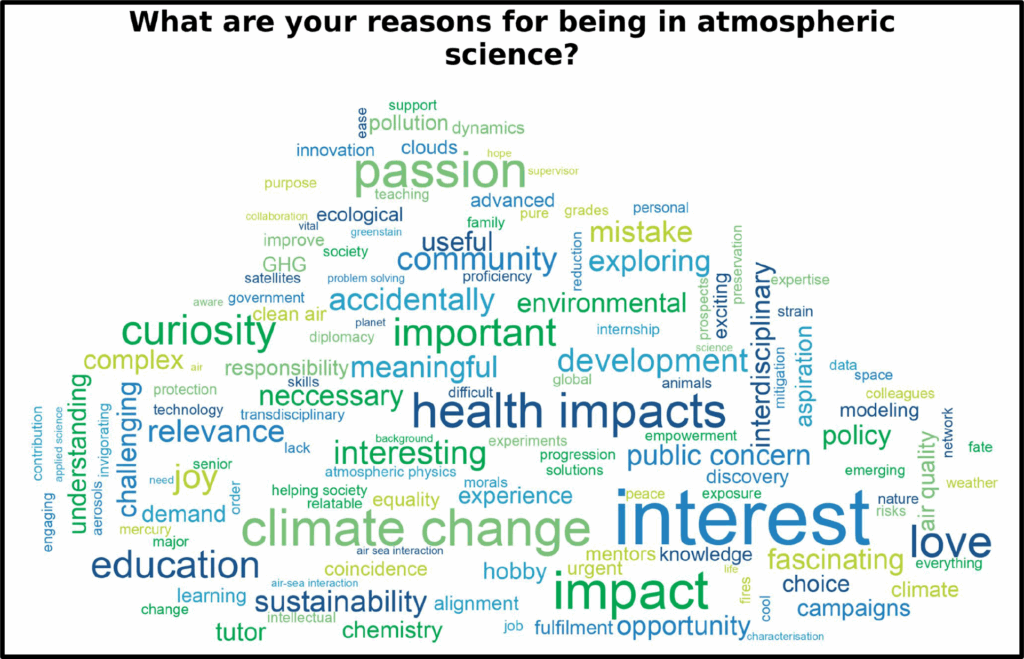
The paper provides a vital snapshot of the contemporary ECR experience. Drawing on quantitative data from a survey of 180 ECRs across 40 countries and the committee’s collective insights, the authors investigate the primary motivations driving ECRs, as well as the multifaceted obstacles they face. Key challenges highlighted include systemic difficulties in securing funding, persistent struggles with work-life balance, and significant uncertainty surrounding long-term career prospects.
The paper also explores the dual impact of globalization, which offers opportunities for collaboration while also presenting challenges like heightened competition and visa restrictions.
Crucially, the authors propose a set of actionable recommendations for the entire community, aimed at fostering a more supportive, inclusive, and sustainable environment for the next generation of atmospheric scientists.
iCACGP is proud to support this ECR-led initiative and encourages all members of our community to read and consider its important findings.
By Max Desservettaz, University of Wollongong, Australia – iCACGP member.
On September 25, 2025, the global atmospheric science community came together for the second IGAC-iCACGP Early Career Researcher (ECR) Online Conference. Building on the success of the inaugural 2023 event, this year’s conference provided a vibrant, accessible, and truly global platform for the next generation of scientists to connect, share their research, and develop new skills. Run continuously over 19 hours and spanning three major regional sessions (Asia/Oceania, Africa/Europe/Middle East, and the Americas), the conference successfully lowered geographical and financial barriers, welcoming over 750 registered attendees and featuring 208 poster presentations.
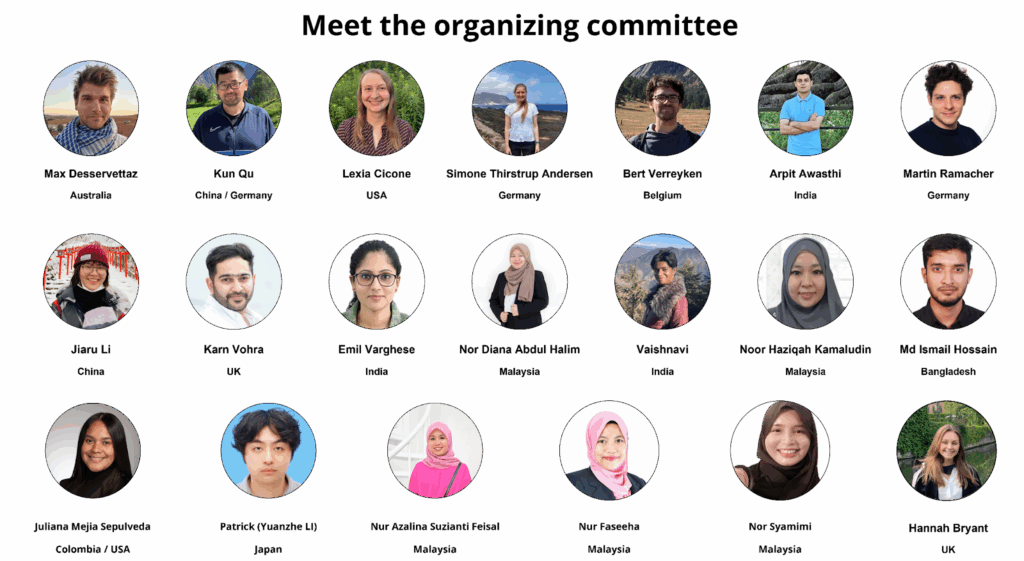
The event was the culmination of nearly a year of planning by a dedicated, diverse, and entirely volunteer-led organizing committee of 22 ECRs from 12 different countries. This global team worked tirelessly across time zones to coordinate everything from fundraising and speaker invitations to social media campaigns and the development of a complex virtual venue. Their collective effort was a testament to the community-driven spirit of IGAC, creating an event built by ECRs, for ECRs.
This collaborative spirit was mirrored by the incredible support from the broader IGAC and iCACGP communities. We are immensely grateful to the mid- and senior-career scientists who volunteered their time to judge posters and participate in our networking sessions, providing invaluable mentorship. Our generous sponsors: the World Meteorological Organization (WMO), the European Space Agency (ESA), Future Earth, the International Association of Meteorology and Atmospheric Sciences (IAMAS), the Copernicus Atmospheric Monitoring Service (AMS-ECMWF), and MDPI & CSIRO publishers provided the crucial funding for the needed licenses to run the event, and for the poster prize – a cornerstone of the event.
Highlights from a 24-Hour Celebration of Science
The conference was a whirlwind of activity, hosted on the interactive Gather Town platform. The virtual venue, complete with a plenary hall, poster rooms, and networking spaces, allowed for both structured sessions and spontaneous interactions.
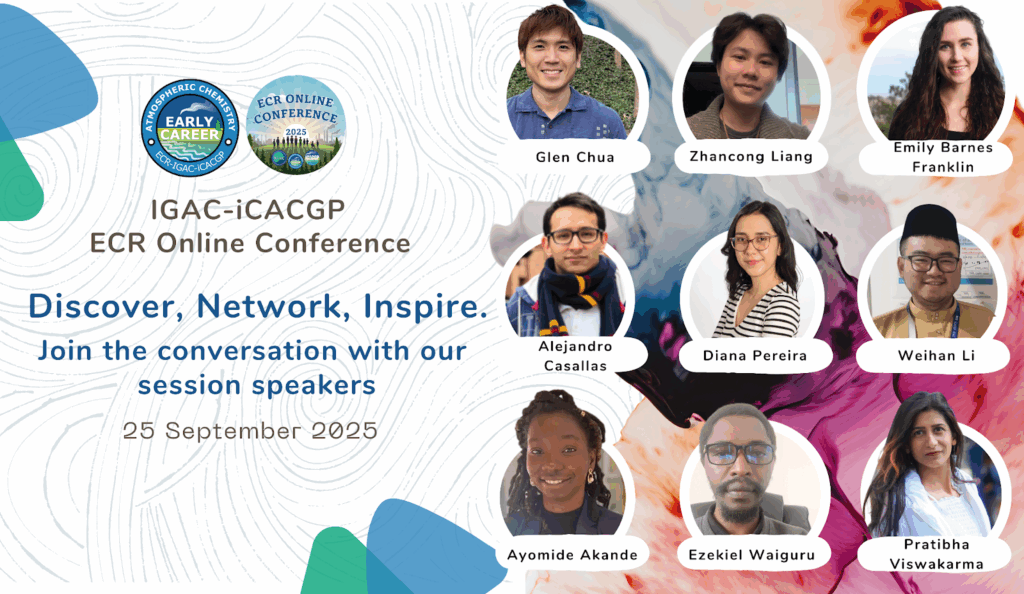
Each of the three regional blocks featured highlight talks from a total of nine outstanding ECR speakers, who shared cutting-edge research on topics ranging from Arctic sea ice prediction to the atmospheric consequences of Amazon biomass burning. Interactive icebreaker sessions and dedicated networking events connected hundreds of ECRs with peers and senior scientists in lively, small-group discussions.
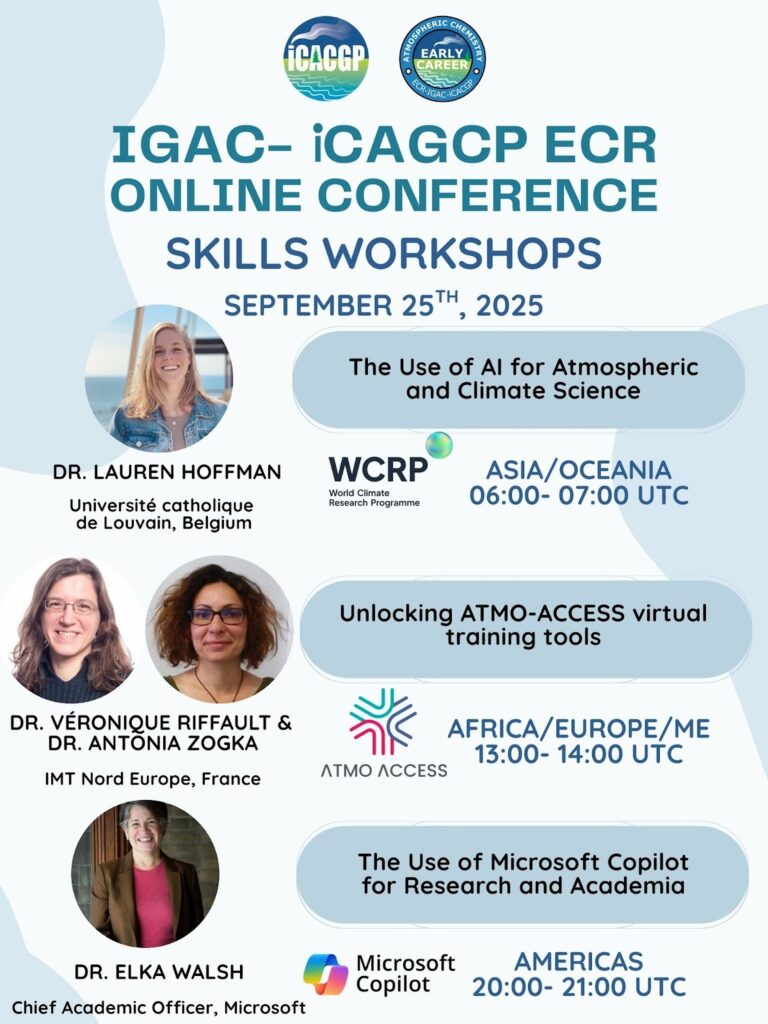
A series of “Skills Workshops,” organized in partnership with the WCRP Academy, ATMO-ACCESS, and Microsoft, provided practical training on crucial topics like the use of AI in climate science, virtual training tools, and leveraging Microsoft Copilot for academic research.
The heart of the conference was the two joint poster sessions, which saw a peak of over 180 attendees simultaneously exploring the virtual poster hall. The quality and breadth of the research on display were truly inspiring.
Announcing the 2025 Poster Prize Winners
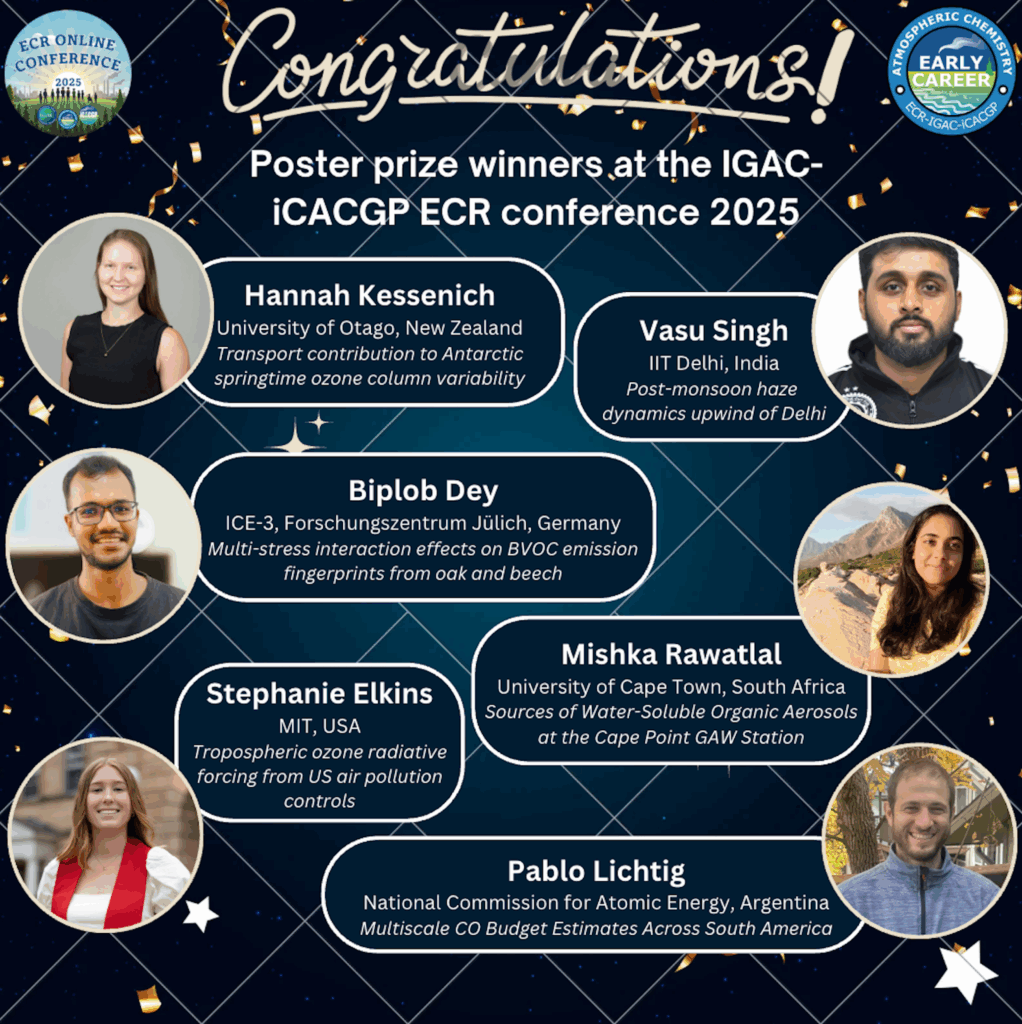
After a rigorous two-stage judging process, we are thrilled to announce the six winners of the Best Poster Prize. Each winner receives full funding to attend the iCACGP-IGAC 2026 Science Conference in Crete, Greece. Congratulations to:
Hannah Kessenich, University of Otago, New Zealand (Also awarded the ESA/Future Earth Prize)
Vasu Singh, IIT Delhi, India
Biplob Dey, Forschungszentrum Jülich, Germany
Mishka Rawatlal, University of Cape Town, South Africa
Stephanie Elkins, MIT, USA
Pablo Lichtig, National Commission for Atomic Energy, Argentina
A Personal Reflection
As the lead organizer for this conference, this event marks the culmination of a decade-long journey within the IGAC community. I attended my first IGAC conference in 2014 in Natal, Brazil, as a nervous first-year PhD student. That experience opened my eyes to the global and collaborative nature of our field. Four years later, at the 2018 conference in Takamatsu, Japan, I had the opportunity to join the ECR conference program and short course organizing committee, a role that ignited a passion for creating opportunities for my peers. This led to my involvement as co-chair, with Emily Matthews, of the newly established IGAC-iCACGP ECR Scientific Steering Committee from 2023-2024, a position that allowed me to help shape the very ECR community that had supported me, and organize the first ECR conference 2 years ago.
Leading this conference feels like coming full circle. It has been an immense privilege to work alongside such talented and dedicated groups of ECRs to build this platform. As I now “retire” from the ECR community, I am excited to continue supporting the next generation from my new position on the iCACGP commission and through my continued involvement in IGAC activities. I have seen firsthand how this community nurtures its young scientists, and I look forward to contributing to that legacy for years to come.Recordings of the highlight talks and skills workshops are available on the IGAC ECR website: https://www.ecr-igac-icacgp.org/